Anti-Fatigue Mats That Make Standing Desks More Comfortable
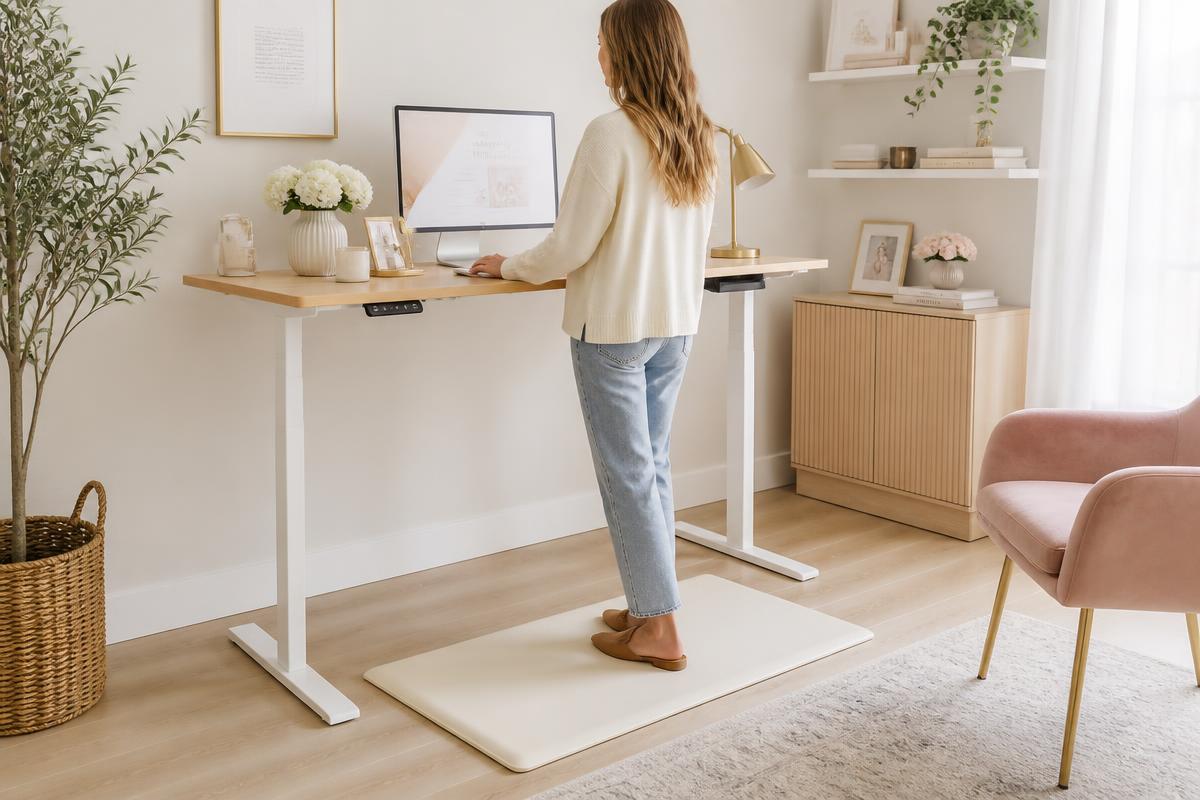
Standing all afternoon on a hard floor is its own kind of tiring. A good mat is what makes a standing desk something you'll actually keep using.
Key takeaways
- Three-quarters of an inch of firm foam beats a thick, squishy mat.
- A contoured or sloped edge encourages the small shifts that prevent aching feet.
- Choose a bevelled edge so you don't trip when you step off.
This article contains affiliate links. If you purchase through our links, The Chic Workspace may earn a commission at no additional cost to you. As an Amazon Associate I earn from qualifying purchases. We only recommend products we believe are useful for creating a beautiful, functional workspace. Read our affiliate disclosure.
Why standing gets uncomfortable
On a hard floor your feet stay almost perfectly still, and it's the stillness rather than the standing that aches. Calves and arches tighten, and within an hour you're leaning on the desk.
A mat with a little give invites constant micro-movement, which keeps circulation going without you thinking about it.
Thickness and firmness
Around three-quarters of an inch of dense polyurethane foam is the sweet spot. Thick, soft mats feel luxurious for a minute and then make you work to stay balanced.
Press the mat with your thumb: it should compress a little and spring back immediately.
Flat or contoured
A flat mat is the safest choice if you move around a lot, wheel a chair on and off, or share the desk. Contoured mats add a raised edge, massage points, or a calf bar that give your feet somewhere to change position.
Whichever you choose, a tapered edge matters — a thick square edge is a genuine trip hazard in a small room.
Living with it
Pale mats look beautiful in a soft, neutral office but show marks from shoes; a damp cloth handles most of it. A mat that lies flat when unrolled and doesn't curl at the corners will stay tidy for years.
If your office doubles as a bedroom, pick a size you can slide under the desk when you sit down.
Buying guide
Our Top Picks
- Anti Fatigue Floor Mat
- Best for
- Standing-desk users who want extra cushioning and comfort while working for long periods.
- Size
- Key feature
- 3/4" high-density foam
- Price
- $49.49
- Score
- 4.8/5
- Anti Fatigue Cushioned Mat
- Best for
- Standing-desk users who want a thick, cushioned mat for comfortable work sessions at home or in the office.
- Size
- Key feature
- Thick cushioned foam for comfort
- Price
- $41.99
- Score
- 4.7/5
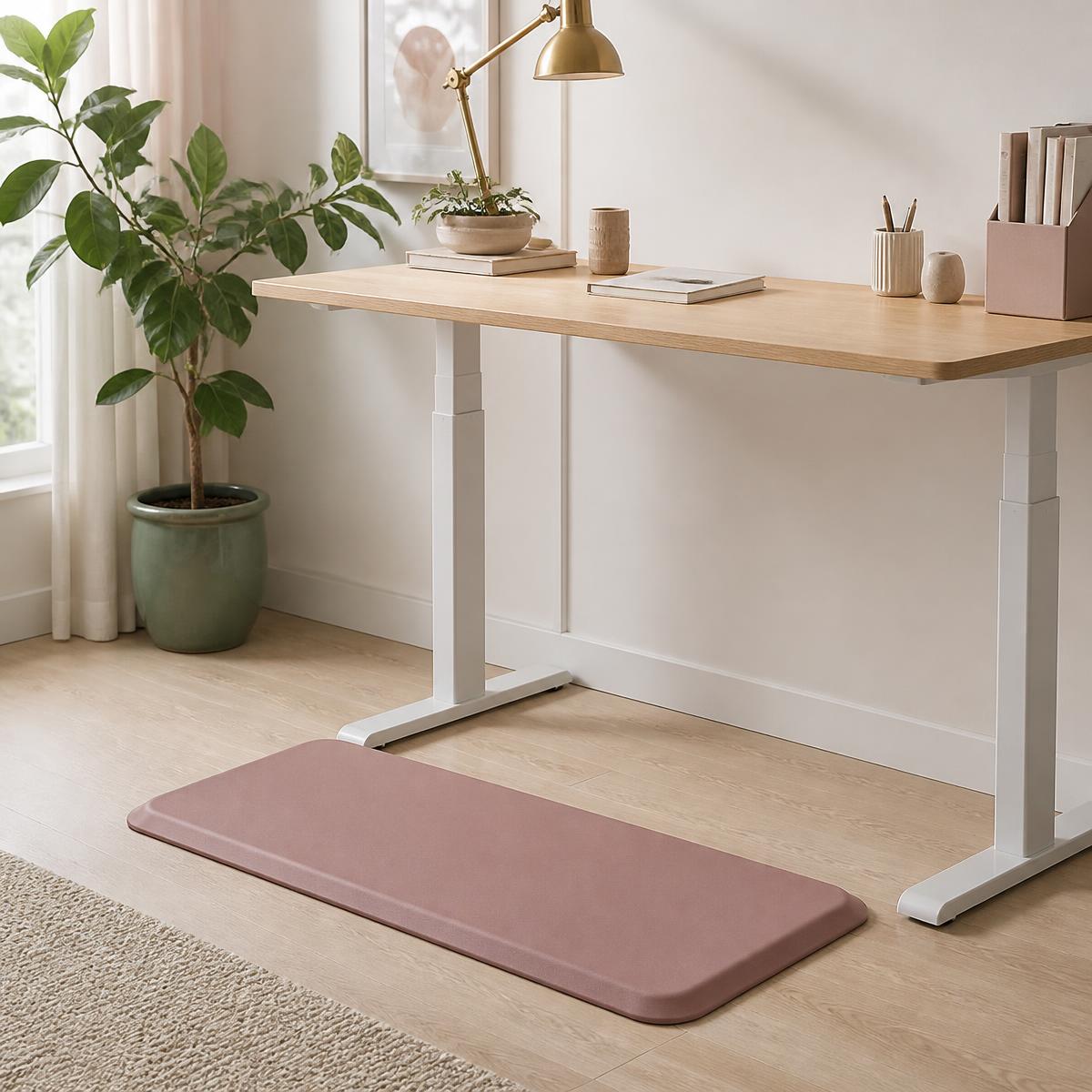
Anti Fatigue Floor Mat
ComfiLife
Best for: Standing-desk users who want extra cushioning and comfort while working for long periods.
Standing-desk users who want extra cushioning and comfort while working for long periods.
Key features
- 3/4" high-density foam
- Non-slip bottom
- Stain-resistant and easy to clean
- Non-slip backing
- Multiple size options
- Stain-resistant surface
- 3/4" thick ergonomic design
- High-density cushioned foam
- Suitable for standing desks, offices, kitchens, and workbenches
Pros
- 3/4" high-density foam
- Non-slip bottom
- Stain-resistant and easy to clean
Cons
- May be too small for larger standing desks
- Can take up significant floor space
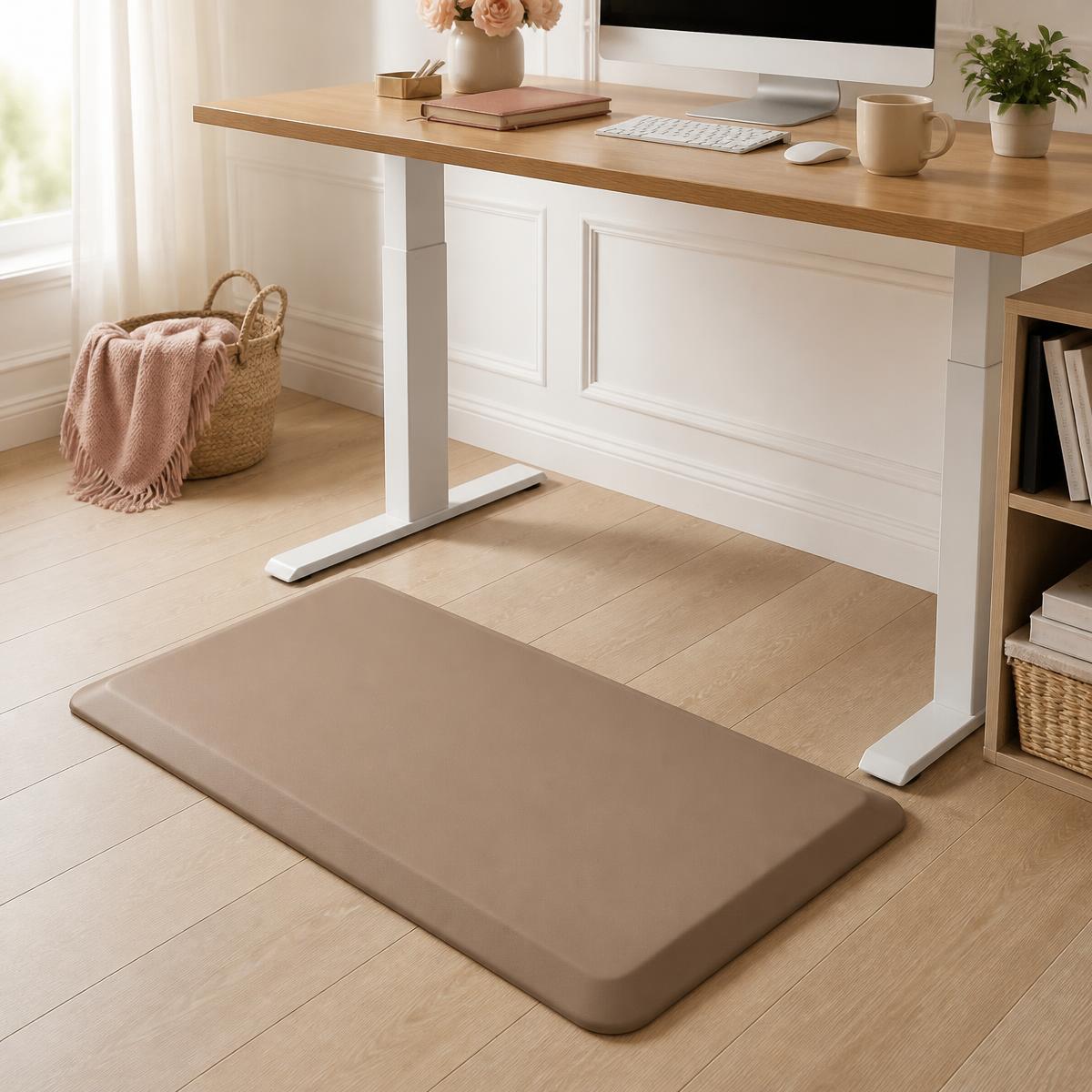
Anti Fatigue Cushioned Mat
Ophanie
Best for: Standing-desk users who want a thick, cushioned mat for comfortable work sessions at home or in the office.
Standing-desk users who want a thick, cushioned mat for comfortable work sessions at home or in the office.
Key features
- Thick cushioned foam for comfort
- Waterproof and easy to clean
- Non-slip backing with beveled edges
- 32" L × 20" W
- 0.75" thick for the 20" × 32" version
- Other sizes include 20" × 39" and 24" × 70".
Pros
- Thick cushioned foam for comfort
- Waterproof and easy to clean
- Non-slip backing with beveled edges
Cons
- May be too large for compact desks
- Can be difficult to move frequently
Products mentioned
| Product | Rating | Best for | Price |
|---|---|---|---|
| Anti Fatigue Floor Mat | 4.8 | Standing-desk users who want extra cushioning and comfort while working for long periods. | $49.49 |
| Anti Fatigue Cushioned Mat | 4.7 | Standing-desk users who want a thick, cushioned mat for comfortable work sessions at home or in the office. | $41.99 |
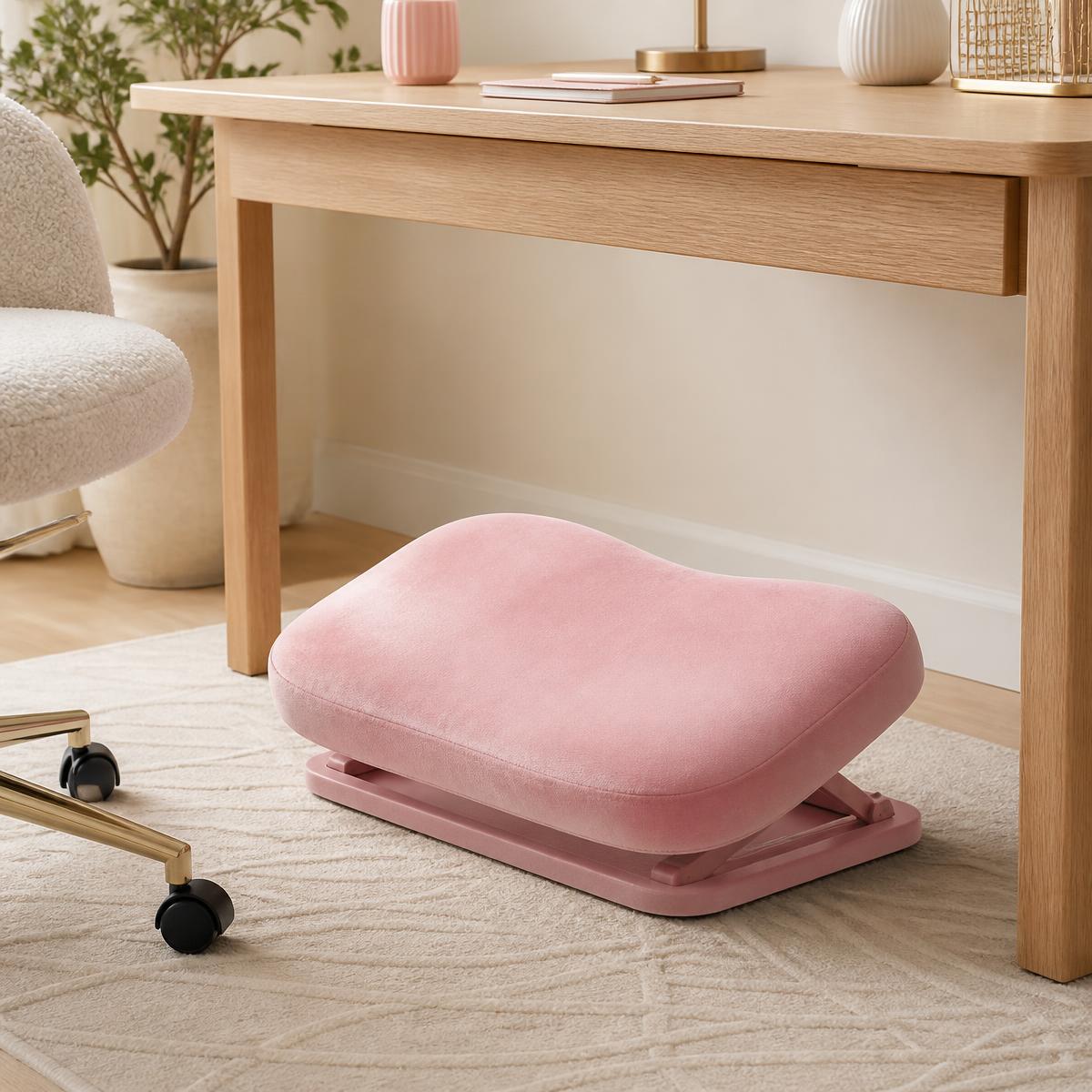 Foot Rest for Under Desk | 4.6 | Home-office workers, gamers, and anyone who spends long hours sitting at a desk and wants extra foot and leg support. | $34.19 |
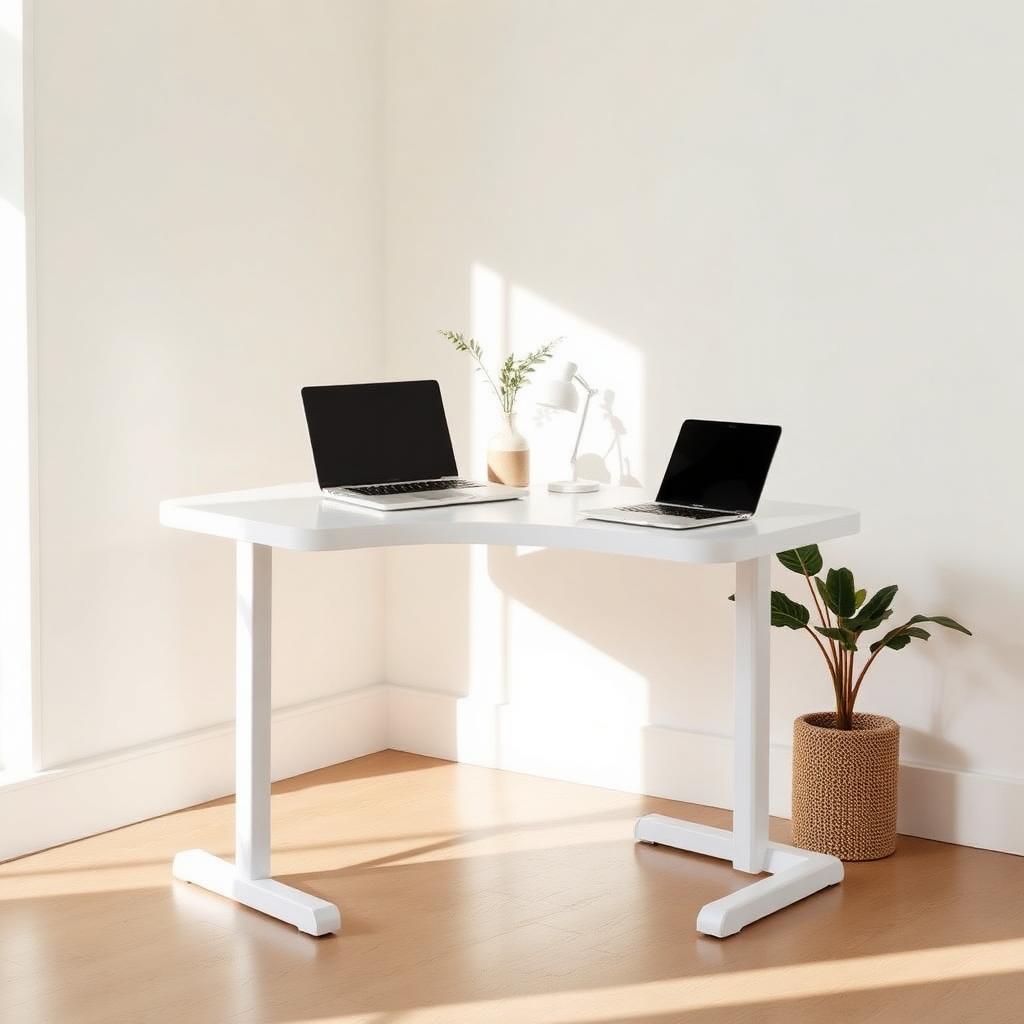 Standing Desk 48x24 — Ergonomic Sit Stand Home Office Desk | 4.8 | Best overall for home offices and small spaces | $449.99 |
Frequently asked questions
Do I really need an anti-fatigue mat?
If you stand for more than about 30 minutes at a stretch on a hard floor, yes. The cushioning keeps your calves and lower back from locking up and makes long standing blocks far easier to repeat.
What thickness should I look for?
Three-quarters of an inch is the sweet spot for most people. Thinner mats feel hard by the end of an hour, and much thicker ones can feel wobbly if you move around a lot.
Will a mat work on carpet?
Yes, but choose a firmer, thinner mat. On plush carpet a very soft mat can feel unstable underfoot.
Mat or a cushioned rug — what's the difference?
An anti-fatigue mat has a dense foam core engineered to spring back, so it keeps supporting you for hours. A rug compresses and stays compressed.
How do I clean one?
Wipe polyurethane mats with a damp cloth and mild soap; avoid bleach and harsh cleaners, which dry out the surface and cause cracking. Let it dry flat before standing on it again.
How long should I stand at my desk each day?
Aim to alternate — roughly 20 to 30 minutes standing for every hour seated is a comfortable target for most people. Change position before you feel sore, not after.
Save for later
Anti-Fatigue Mats That Make Standing Desks More Comfortable
The Chic Workspace
Pin this article
Written by
Isabelle Marchetti
Isabelle is a certified ergonomics enthusiast and interior-obsessed remote worker. She has tested more than 80 desks, chairs, and accessories so you can build a workspace that is as kind to your body as it is to your eyes.
More about Isabelle →Keep reading
You may also like
Standing Desks for Small Spaces: 5 Picks Compared & Ranked
We compared eleven compact standing desks on size, height range, stability, and value. These five are the ones we'd recommend first.
Read article
Under-Desk Footrests for Shorter Legs: Our Top Picks
If your feet dangle or your chair leaves a pressure line under your thighs, a footrest is the smallest fix with the biggest comfort payoff.
Read article
Office Chairs for Small Spaces: Comfortable, Chic & Ergonomic
Compact ergonomic chairs that support your back, tuck under a narrow desk, and still look beautiful in a living room or bedroom.
Read article